
Overview
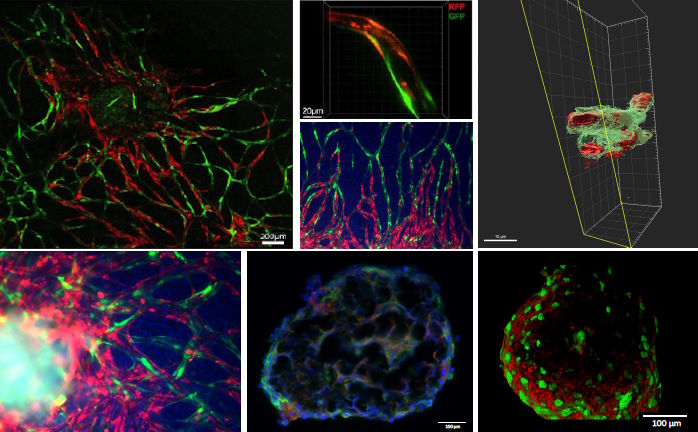
Topic 5 – 3D StrAIT develops innovative strategies and cutting-edge technological tools to create advanced 3D models that more closely replicate in situ conditions than current preclinical models. These models aim to deepen our understanding of the mechanisms underlying inflammatory and cancerous diseases, while improving the evaluation and selection of new therapies.
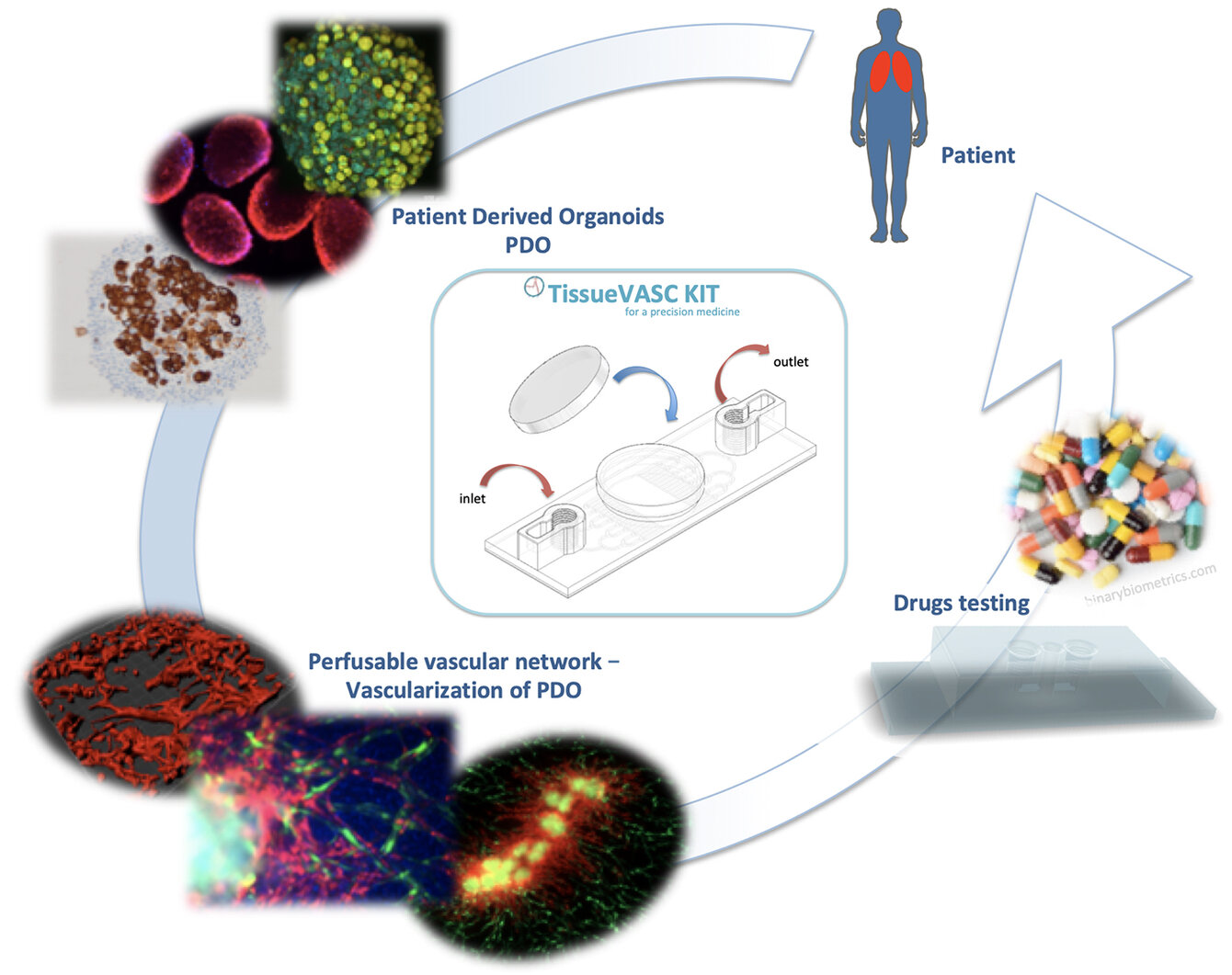
Our approach is based on the bioengineering of complex tissues, known as "Patient-Derived Living Materials (PDLM)", which integrate:
A structured 3D cellular compartment that reproduces the target organ (e.g. lung, intestine, liver) at the millimeter scale,
A matrix compartment that mimics the tissue microenvironment, including functional vascularization and immune system.
These models enable more accurate replication of in situ cellular interactions and allow for the assessment of treatment responses in an environment closely resembling that of the patient.
Scientific projects
We apply these tools to various pathological contexts through several projects:
Project POINTED: Modeling of tumoral lung tissue, with a focus on vascularization and response to targeted therapies,
Project FLAME: Modeling of healthy lung tissue for studies on inflammation caused by pollutants,
Project MITI2: Reproduction of inflammatory intestinal tissue to test new therapeutic approaches for chronic inflammatory bowel diseases (IBD),
Hepatocellular Project: Development of a liver model for translational research on liver cancer based on a new human hepatic cell line,
ANR RABSEL Project: A preclinical model aimed at reducing inflammation and symptoms of rheumatoid arthritis.
We are also developing toxicological tools tailored to 3D models to enable more predictive assessments of treatment toxicity. This dimension enhances the value of our models for public health safety applications and opens new perspectives for the toxicological evaluation of emerging pollutants.