
General theme
The INSERM-UNISTRA UMR 1260 "Regenerative Nanomedicine" unit operates at the cutting edge of translational medicine, where innovative science drives clinical solutions. Affiliated with the INSERM Thematic Institute for Health Technologies, we pioneer advanced approaches in tissue repair, regenerative medicine and precision therapeutics that address critical unmet medical needs. Our research integrates nanotechnology, advanced therapeutics and patient-centered platforms to bridge the gap between laboratory discovery and clinical implementation. Through interdisciplinary collaboration spanning material science, molecular biology, medicinal chemistry and clinical applications, we develop transformative therapies for degenerative diseases, oncology, inflammatory diseases, metabolic diseases, organ dysfunction, rare conditions and public health challenges, translating fundamental insights into tangible patient benefit.
Research focus
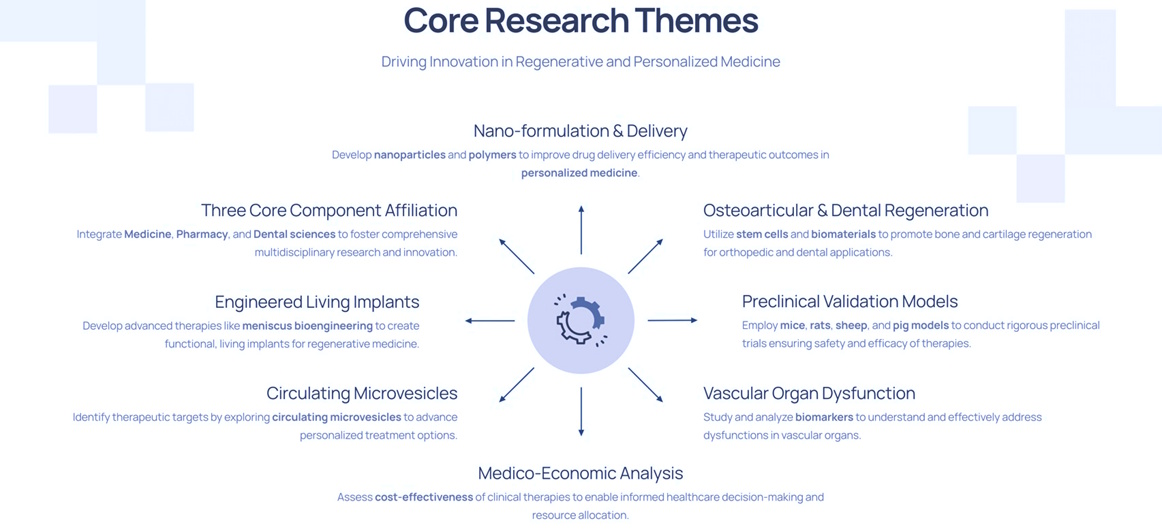
Regenerative NanoMedicine unit drives innovation at the interface of tissue engineering, nanomedicine, drug delivery, therapeutic discovery, and living materials engineering. Our programs combine basic and translational research to understand disease mechanisms, validate novel therapeutic drugs and delivery systems, identify predictive biomarkers, and advance precision medicine approaches in the clinic.
Our work relies on cutting-edge technologies including nanostructured smart materials, medicinal chemistry for drug discovery, omics-based pathway analyses, 2D cell cultures, 3D organoids, vascularized organ-on-chip systems, and disease-relevant mouse models.
Core technologies and expertise
At the heart of Regenerative Nanomedicine unit is a singular mission: advancing Regenerative Nanomedicine and Health Technologies. We develop advanced therapeutics that integrate ATMPs, stem cell therapies, and extracellular vesicles to precisely modulate tissue repair, immune responses and disease pathways; nanotechnology and delivery systems for precision nano-formulations, microvesicle-based therapies and biomarker-guided interventions; next-generation medical devices and scaffolds to support organ repair, create regenerative microenvironments and enhance functional outcomes.
Our platforms leverage innovative 3D models, organoids and bioprinted tissues to replicate complex microenvironments, study cellular heterogeneity and overcome therapeutic resistance in cancer, inflammatory, gastric and intestinal pathologies. By combining these platforms with patient-specific secretomes and microenvironment-focused strategies, we design therapies that are precise, adaptive and personalized.